What Is a Business Broker?
Selling a home? You call a real estate agent. Selling a company you spent 20 years building? That’s where a business broker comes in.
Buying or selling a business is one of the biggest financial decisions an entrepreneur will make. Valuations, confidentiality, negotiations, legal paperwork: the process gets complex fast. A good broker guides both sides through it.

What a business broker is
A business broker is a professional intermediary who helps small and medium-sized businesses change hands. They work alongside buyers and sellers from the first valuation to the final signature. Some owners sell on their own, but many hire a broker to avoid costly mistakes and reduce risk.
Many brokers work independently. Others work within brokerage firms, advisory groups, or M&A (mergers and acquisitions) practices, which typically handle larger deals.
Get new listings and our guides by email, free.
What a broker actually does
Selling a business is much more than finding a buyer. A broker typically helps with:
Why confidentiality matters so much

If word gets out too early that a business is for sale, employees may start job-hunting, customers may look elsewhere, suppliers may tighten terms, and competitors may pounce. A sale can lose value before it even happens.
That’s why brokers use confidentiality agreements, also called NDAs (non-disclosure agreements), and share details in stages. On Bizcocity, this is built in: our digital NDA system lets buyers sign online before seeing sensitive information, so a deal can move forward without disrupting daily operations.
How brokers add value
For sellers, a broker can position the business well, reach more qualified buyers, save time on unqualified inquiries, strengthen your negotiating position, and raise the odds of a successful sale.
For buyers, a broker can introduce relevant opportunities (sometimes before they’re public), offer valuation insight, support due diligence, and help structure a fair deal. Many brokers also have relationships with investors and owners actively looking to buy or sell.
Licensing and regulations
Rules vary by location. In some U.S. states, brokers need specific licenses, especially when commercial real estate is part of the deal. In Canada, requirements vary by province. Because legal, tax, and disclosure obligations differ, buyers and sellers should get proper legal, tax, and financial advice before closing.
How brokers get paid
Most brokers earn a success fee: a commission paid when the sale closes, usually a percentage of the price. Some also charge a retainer (an upfront fee to start working on the file), or a mix of both. Rates depend on deal size, industry, and local market. Many owners see the fee as an investment in a smoother sale, stronger buyers, and a better final price.
How to choose the right broker
Where to find one
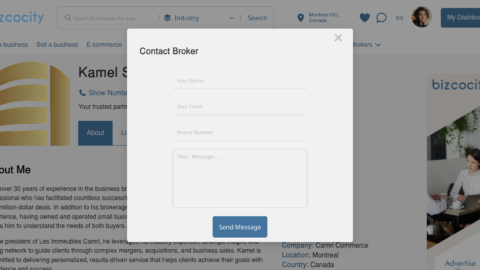
Through referrals from accountants and lawyers, industry associations, and specialized marketplaces like Bizcocity, where you can browse broker profiles and contact them directly. Fees vary from platform to platform. Bizcocity is the only business-for-sale marketplace in the industry that is completely free for buyers, sellers, and brokers.
Final thoughts
Business brokers help entrepreneurs buy and sell with confidence. From valuation to closing, they turn a complicated transaction into a manageable one. And platforms like Bizcocity connect buyers, sellers, investors, and brokers at a lower cost than any other platform in the industry: zero.
Bizcocity newsletter
Stay in the loop
New listings, practical guides and BrokerGenius news. Free, no spam.